vasco de gama
The dream of indies
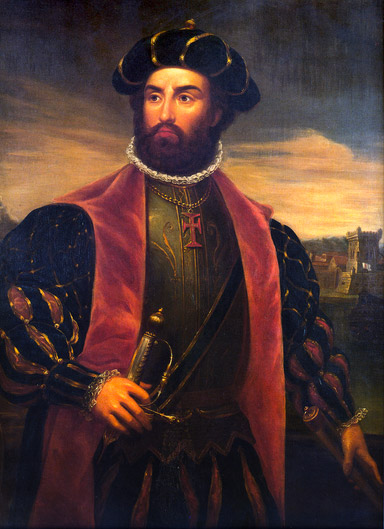
On 8 July 1497, Vasco da Gama set sail from Lisbon at the head of a fleet of four ships and 170 men. King Manuel I of Portugal had entrusted him with the mission of reaching the East to establish direct trade with the spice-producing countries, without relying on intermediaries.
After sailing along the African coast, the fleet ventured far into the South Atlantic to take advantage of more favourable winds. For nearly three months, the crews sailed without sight of land, facing the vastness of the ocean and the uncertainty of their destination.
In November 1497, the ships rounded the treacherous Cape of Good Hope. The expedition then continued along the eastern coast of Africa, stopping at several ports, including Mozambique, Mombasa and Malindi.
At this last port, Vasco da Gama secured the assistance of a pilot familiar with the monsoon winds and the trade routes of the Indian Ocean. Guided by his expertise, the fleet embarked on the crossing of the Arabian Sea.
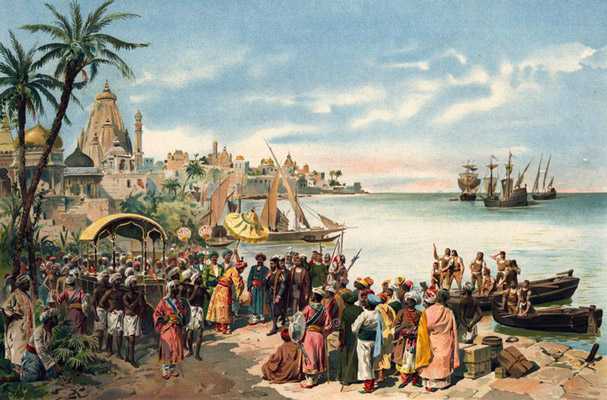
On 20 May 1498, after more than ten months at sea, the Portuguese ships finally reached Calicut, on the south-western coast of India.
ON THE SPICE ROUTE
In the 15th century, spices from the East were among the most precious commodities in Europe. Pepper, cinnamon, ginger and cloves travelled thousands of miles across Asia and the Mediterranean before reaching European markets, where they commanded extraordinary prices.
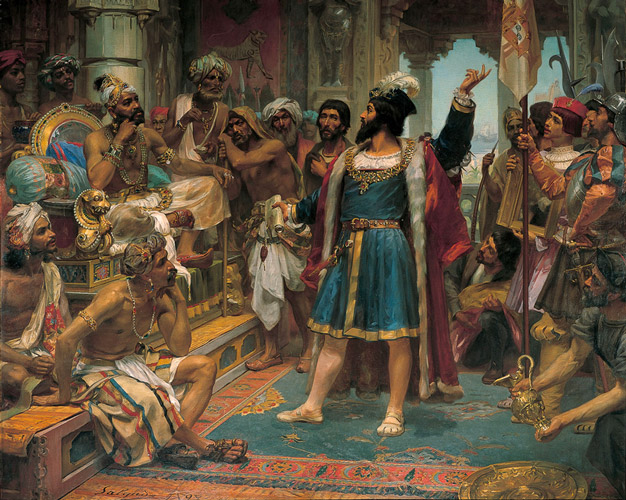
Upon arriving at the port of Calicut, Vasco da Gama discovered a prosperous trading city where Indian, Arab and other Asian merchants had gathered for centuries. Far from being an isolated land, India was already part of an extensive trading network connecting East Africa, the Middle East and Asia.
The Portuguese attempted to establish trading relations, but their gifts and merchandise aroused little interest. Negotiations proved difficult, and Vasco da Gama departed without securing the agreements he had hoped for.
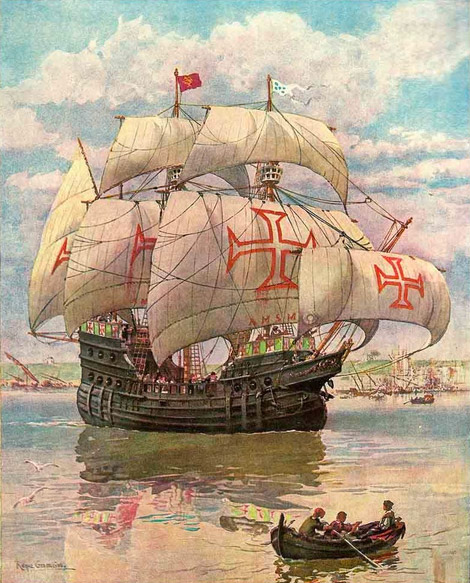
Portuguese Ship of the Late 15th Century, by Alfredo Roque Gameiro. Vasco da Gama Before the Zamorin of Calicut, by Veloso Salgado, 1898. In 1499, Vasco da Gama returned to Portugal after a gruelling homeward voyage, during which scurvy had decimated his crews. Despite the heavy loss of life, his expedition marked a decisive turning point: a direct maritime route between Europe and India had finally been established.
A New Era of Maritime Exploration
The success of this voyage profoundly transformed Portugal's commercial ambitions.
In the early years of the 16th century, new fleets set sail for the Indian Ocean. The Portuguese gradually established trading posts and fortresses along the African and Asian coasts, seeking to gain control of the lucrative spice trade.
Vasco da Gama himself returned to India in 1502, this time commanding an armed fleet. This second expedition, marked by violent confrontations and attacks on merchant vessels and local populations, also revealed the brutality of Portuguese colonial expansion.
Appointed Viceroy of Portuguese India in 1524, the navigator embarked on one final voyage to the East. He died later that year in Cochin, on the Indian coast.
His name remains associated with one of the great turning points in maritime history: the establishment of a lasting ocean route between Europe and Asia, which would help reshape the world's trading routes.
Inspiration
From the Portuguese coast to the shores of India, Vasco da Gama’s epic voyage evokes an age when navigators ventured beyond the known horizons, driven both by the ambitions of conquest-hungry monarchs and by their own boundless courage.
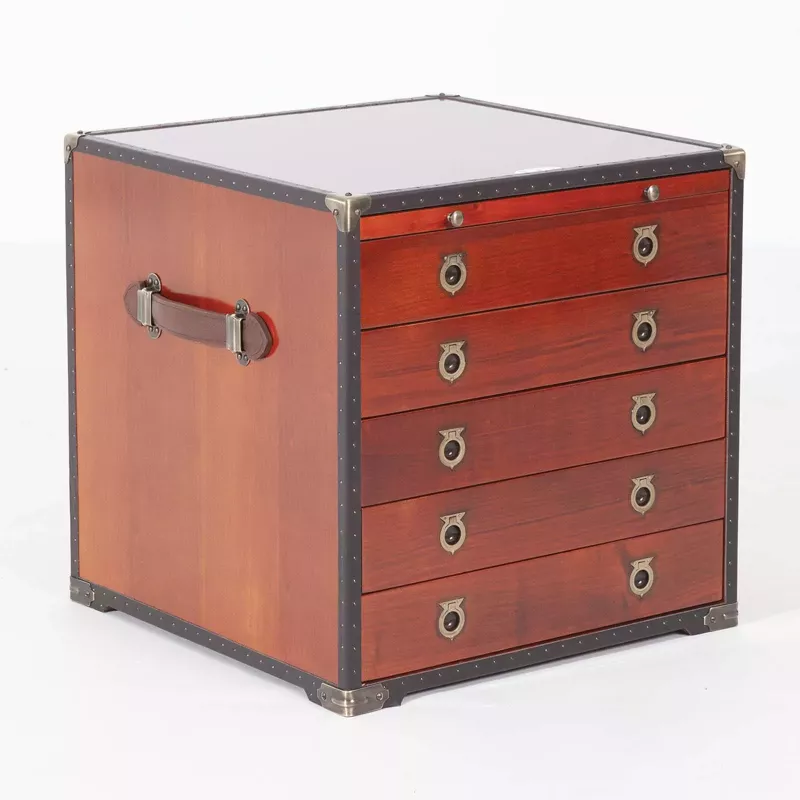
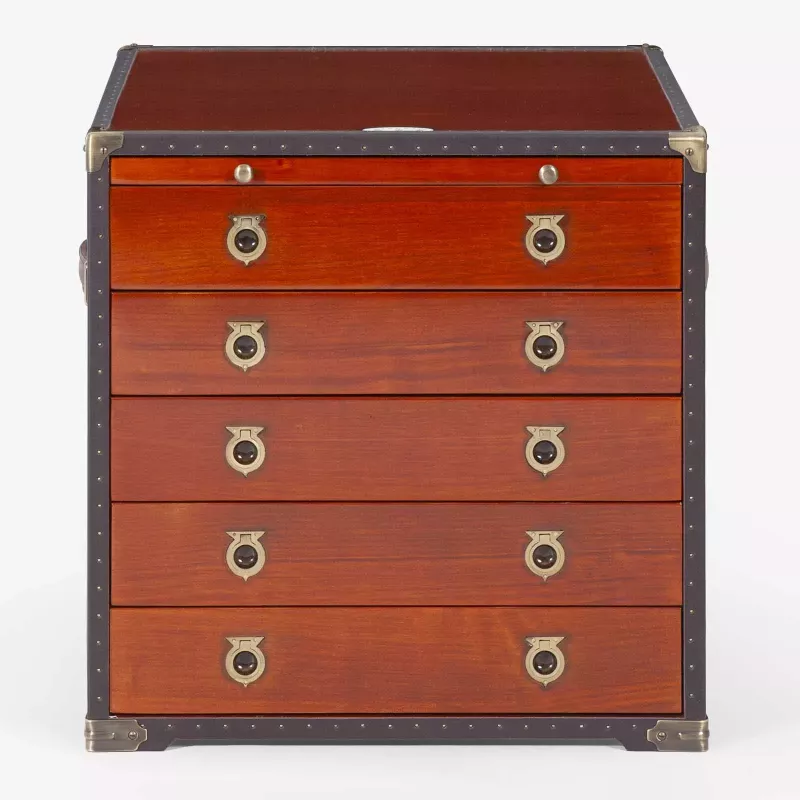
It is from this legacy of great trading routes and furniture designed to accompany travellers on their journeys that Starbay draws part of its inspiration. Much like our Vasco side table, our creations reinterpret the distinctive codes of maritime furniture, drawing, however, more upon the elegance of the 19th and 20th centuries than upon that of the great explorations of the 15th century.