BOUGAINVILLE
The Pacific Odyssey
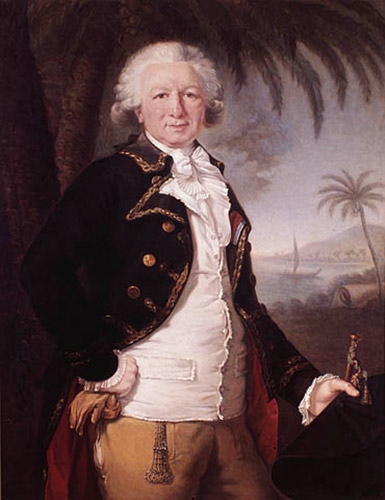
Born in Paris in 1729, Louis-Antoine de Bougainville seemed an unlikely candidate to become one of the greatest French navigators of his century. Initially a lawyer, then an officer and diplomat, he distinguished himself during the Seven Years' War (1756– 1763), particularly in Canada, where he served alongside the Marquis de Montcalm against British forces.
At a time when the great European powers were competing for control of maritime trade routes and overseas territories, Bougainville gradually turned his attention to exploration. In 1764, he set out to establish a French colony in the Falkland Islands, off the coast of South America. However, Spanish claims to the archipelago soon forced him to relinquish the settlement.
In 1766, Louis XV entrusted him with a mission of far greater ambition: to lead an expedition around the world in search of new trade routes, lands still largely unknown to Europeans, and scientific knowledge.
The Discovery
of the Garden of Eden
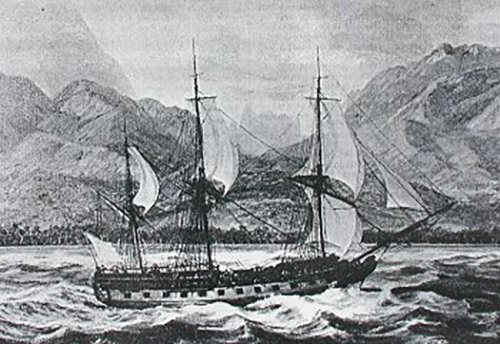
On 15 November 1766, the frigate La Boudeuse departed Nantes on an expedition that would take Bougainville far beyond the horizons familiar to French navigators. A few months later, she was joined in Rio de Janeiro by L'Étoile, a supply ship carrying provisions and scientific equipment. After a stopover in South America, the two vessels navigated the treacherous Strait of Magellan before venturing into the vast expanse of the Pacific Ocean.
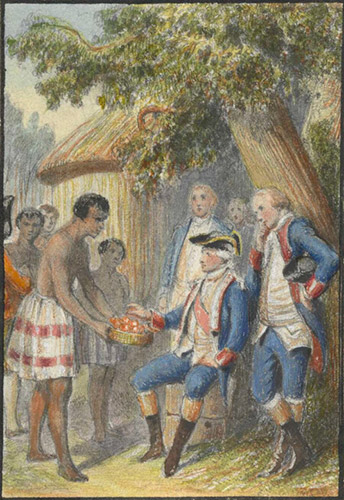
In April 1768, the expedition reached Tahiti, an island already visited the previous year by the British navigator Samuel Wallis. Bougainville and his crew encountered a society whose customs, lush landscapes and warm welcome captivated them. The explorer named the island "New Cythera", after the Greek island associated with Aphrodite, the goddess of love.
Although their stay lasted only around ten days, it became the most celebrated episode of the voyage. In his accounts, Bougainville portrayed Tahiti as a land of abundance and freedom, helping to inspire the European vision of an earthly paradise untouched by the constraints of civilisation.
The expedition then continued its journey through the Pacific archipelagos, sailing past the Samoan Islands, the New Hebrides — now Vanuatu — and the Solomon Islands, before reaching the East Indies. On board, scientists and naturalists gathered observations, plants and specimens, enriching European knowledge of these still largely unexplored regions.
A Voyage That Changed
the Way the World Was Seen
After more than two years at sea, Bougainville returned to the French coast in March 1769. His expedition went down in history as the first circumnavigation of the globe under the French flag. Despite storms, disease and the dangers of navigating waters that were still poorly charted, only seven men lost their lives during the voyage — a remarkably low toll for the time.
Yet beyond this maritime achievement, the expedition marked an important milestone in the history of science and exploration. Among those on board was Jeanne Barret, assistant to the botanist Philibert Commerson, who had embarked disguised as a man, as women were forbidden from serving aboard ships of the French Royal Navy. She would later become the first woman known to have circumnavigated the globe.
In 1771, Bougainville published his celebrated Voyage autour du monde (A Voyage Around the World), recounting his adventures and describing the peoples he had encountered. The book attracted widespread attention among scholars and philosophers of the Enlightenment.
Having become a leading figure in French exploration, Bougainville continued his career in the Royal Navy before witnessing the upheavals of the French Revolution and the Napoleonic Empire. Napoleon appointed him senator and Grand Officer of the Legion of Honour. He died in Paris in 1811, aged 81, and was laid to rest in the Panthéon.
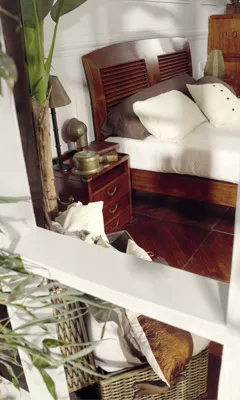
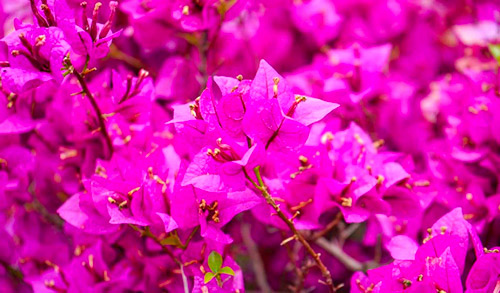
Today, his name lives on through an island in the Solomon Islands archipelago and the bougainvillea, a plant renowned for its vibrant colours and named in his honour by the botanist Commerson.
Inspiration
Bougainville's voyage transformed the way Europeans perceived the world, illustrating the profound influence of explorers during this era.
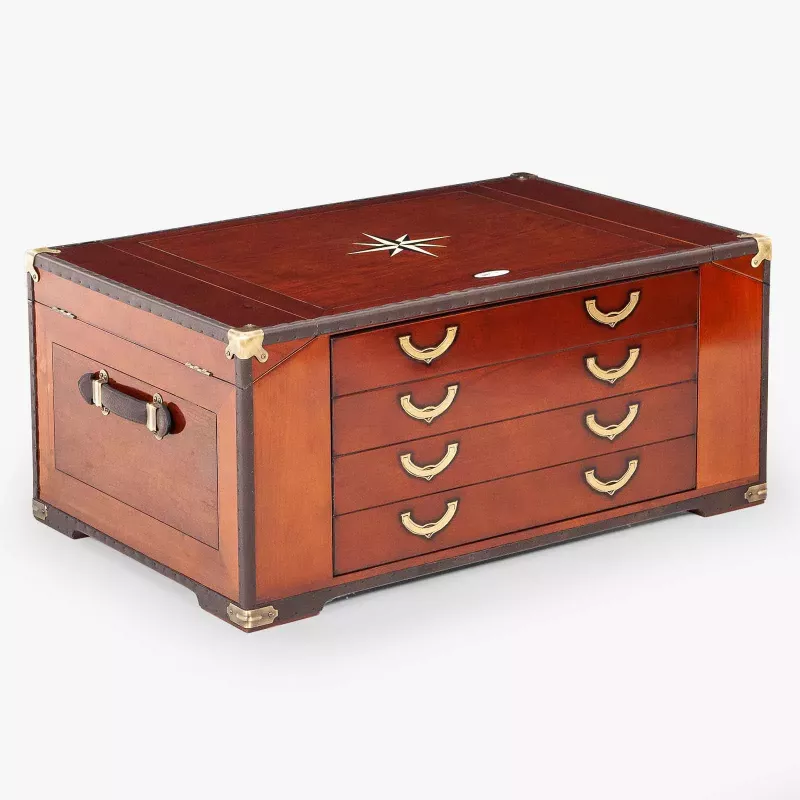
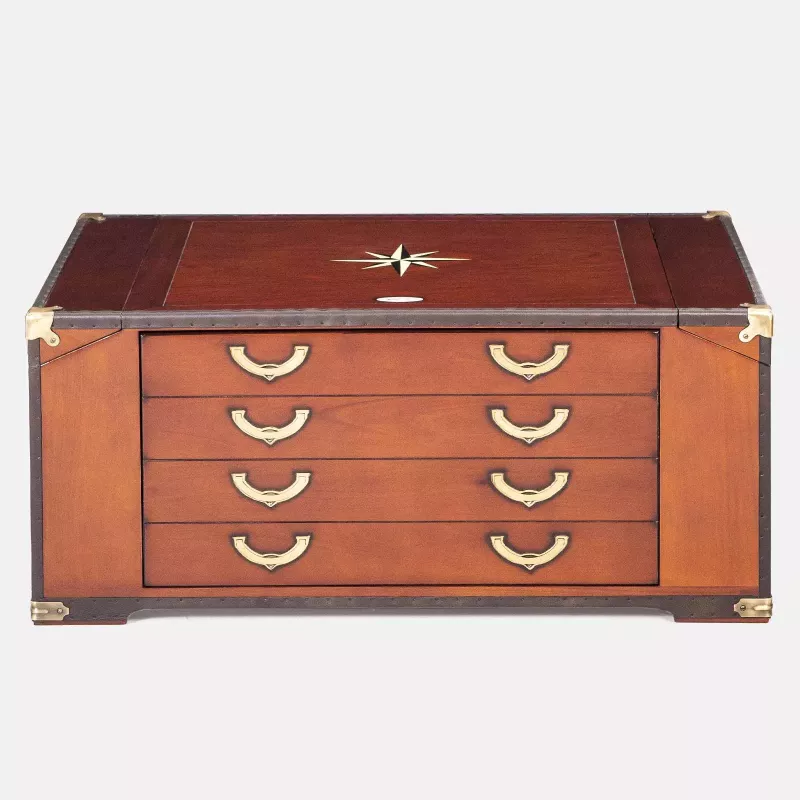
It is from this rich maritime heritage that Starbay draws its inspiration. We designed the Bougainville coffee table as a compact piece of furniture featuring numerous storage spaces and compartments, reminiscent of the travelling trunks that once accompanied officers aboard ships.
Adorning its top, an elegant marquetry compass rose pays tribute to the art of navigation and to those explorers who, like Bougainville, dared to set sail towards unknown horizons.