DARJEELING
THE TREASURE OF THE MISTS
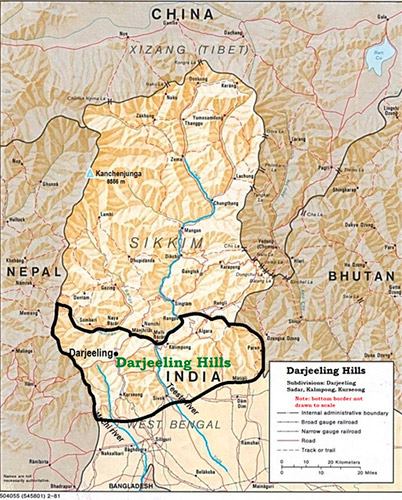
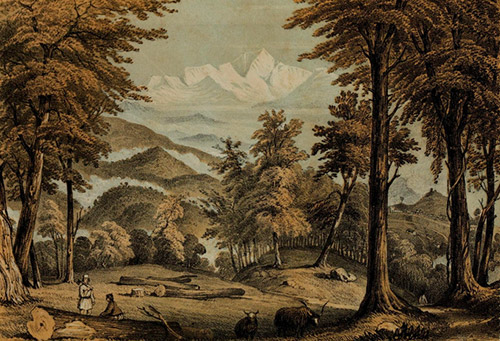
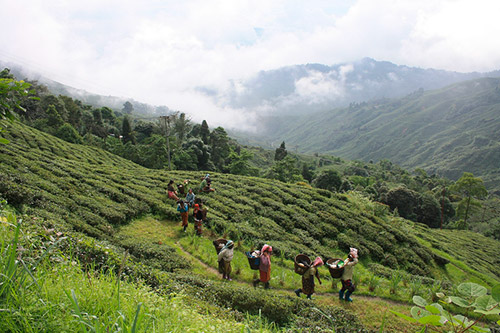
Perched on the foothills of the Himalayas, at an altitude of over 2,000 metres, Darjeeling seems suspended between heaven and earth. Beyond the mist that shrouds its hills rise the snow-capped peaks of Kangchenjunga, while tea plantations stretch as far as the eye can see across the lush green slopes.
Once a modest territory of the Kingdom of Sikkim, this town in northern India underwent a remarkable transformation in the 19th century, as the British East India Company gradually extended its influence across the Indian subcontinent.
In 1828, two British officers, George Lloyd and J. W. Grant, discovered the hills of Darjeeling during a mission to the region. Captivated by its cool climate and strategic location overlooking the Himalayas, they recommended establishing a hill station where Europeans could escape the oppressive heat of the Bengal plains.
On 1 February 1835, the ruler of Sikkim ceded a portion of territory, including Darjeeling, to the East India Company. The British then set about transforming these wooded hills into a flourishing mountain retreat.
Roads, residences, hotels and administrative buildings gradually emerged. Darjeeling became a popular refuge for British officials, officers and families living in India, who came to enjoy, for a season, a climate reminiscent of their homeland.

The Green Gold of the Himalayas
Yet it was another treasure that would bring Darjeeling international fame: tea.
At the beginning of the 19th century, China still held a dominant position in the global tea trade. Eager to reduce their dependence on Chinese imports, the British sought to develop tea cultivation in the territories they controlled in India.
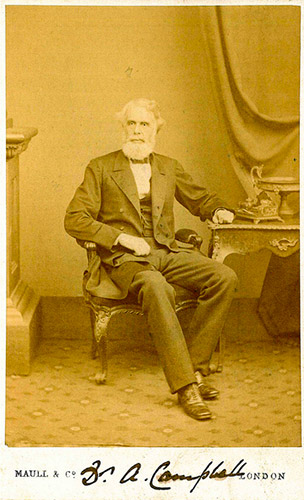
Around 1841, British physician and administrator Archibald Campbell began experimenting with Chinese tea plants in his garden in Darjeeling. The results were promising: the altitude, cool temperatures and mountain humidity provided particularly favourable conditions for their growth.
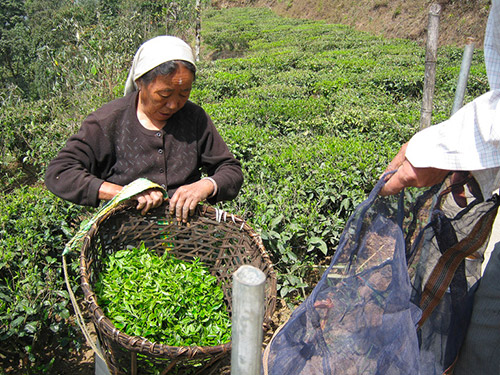
The first commercial tea plantations appeared in the 1850s. Within a few decades, the hillsides were covered with tea gardens, cultivated by a large workforce drawn particularly from neighbouring Nepal.
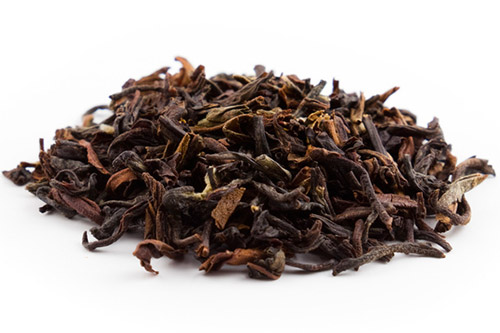
Darjeeling tea gradually earned an exceptional reputation. Prized for its delicate aromas, sometimes floral and muscatel in character, it became one of the most sought-after teas among British and European connoisseurs.
It soon became known as the "Champagne of Teas", an expression reflecting the prestige acquired by this exceptional tea grown on the slopes of the Himalayas.
The Little Mountain Train
As the tea plantations flourished, one challenge remained: transporting goods and passengers across the region's particularly steep terrain.
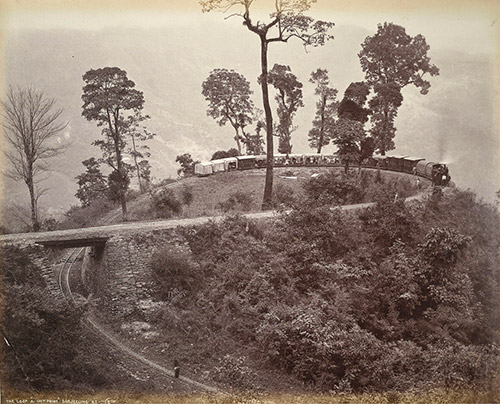
In 1879, construction began on a railway line designed to connect the plains of Bengal to Darjeeling. The project presented a remarkable engineering challenge: enabling steam locomotives to climb the steep slopes of the Himalayas.
Opened in 1881, the Darjeeling Himalayan Railway, soon nicknamed the Toy Train, winds its way through the mountains on a narrow-gauge track just 61 centimetres wide. To overcome the steep gradients, engineers devised an ingenious system of loops and zigzags. The train passes through villages, skirts tea plantations and offers passengers spectacular views of the Himalayan peaks. This railway played a vital role in Darjeeling's economic development, facilitating tea exports and bringing visitors to the region.
In 1999, it was inscribed on the UNESCO World Heritage List, standing as a testament to a remarkable feat of 19th-century railway engineering. With India's independence in 1947, Darjeeling entered a new era while retaining traces of its colonial past.
Today, its former British residences, historic hotels and famous railway stand alongside Buddhist monasteries, bustling markets and the traditions of the Nepali, Tibetan and Lepcha communities that contribute to the region's distinctive identity.
Inspiration
In the 19th century, Darjeeling became a favoured retreat for the British, who sought refuge from the heat of the Indian plains in the cool mountain climate. Elegant colonial residences gradually emerged, fostering a refined way of life. As the tea plantations flourished, tea naturally became central to this tradition, ultimately shaping the very identity of the region.
It is from this heritage that Starbay draws inspiration for its Darjeeling nesting tables. With their elegant cross-shaped legs and three tabletops of different sizes, they evoke the furniture of colonial residences, where each small table found its place amidst conversations and traditional afternoon tea gatherings. Practical and easy to move, they continue to invite us to enjoy a cup of tea wherever we please.